A Father’s Day Post

25 06 2009

EXL_RGBThis post is a little late but a Father’s Day post is so important that it is better late than never.  Father’s Day should be a time for celebrating what our father’s have sacrificed to allow us to lead the lives of our dreams.  For some it should be a rude awakening.


Look, I hate to be Debbie Downer, but someone has to say something already.

Debbie_Downer


Our father’s are now in the worst shape of their lives, many suffering from a very scary condition called Metabolic Syndrome X.


fat-belly-oxygo-by-2008scandinavia

One of the main indicators of someone who has metabolic disorder is abdominal obesity, as clearly demonstrated in the picture above. The scary part is that many of our father’s look just like this!


Please read below for an excellent description of Metabolic Syndrome from www.MedicineNet.com:


What is metabolic syndrome?


An association between certain metabolic disorders and cardiovascular disease has been known since the 1940s. In the 1980s this association became more clearly defined and the term metabolic syndrome (also known as syndrome X or the dysmetabolic syndrome) was coined to designate a cluster of metabolic risk factors that come together in a single individual. In more current times, the term metabolic syndrome is found throughout medical literature and in the lay press as well. There are slight differences in the criteria of diagnosis – depending on which authority is quoted. Regardless, the concept of a clustering of risks factors leading to cardiovascular disease is well accepted.


The main features of metabolic syndrome include insulin resistance, hypertension (high blood pressure), cholesterol abnormalities, and an increased risk for clotting. Patients are most often overweight or obese.


Insulin resistance refers to the diminished ability of cells to respond to the action of insulin in promoting the transport of the sugar glucose, from blood into muscles and other tissues. Because of the central role that insulin resistance plays in the metabolic syndrome, a separate article is devoted to insulin resistance.


How is metabolic syndrome defined?


The definition of metabolic syndrome depends on which group of experts is doing the defining. Based on the guidelines from the 2001 National Cholesterol Education Program Adult Treatment Panel (ATP III), any three of the following traits in the same individual meet the criteria for the metabolic syndrome:


   1. Abdominal obesity: a waist circumference over 102 cm (40 in) in men and over 88 cm (35 inches) in women.


   2. Serum triglycerides 150 mg/dl or above.


   3. HDL cholesterol 40mg/dl or lower in men and 50mg/dl or lower in women.


   4. Blood pressure of 130/85 or more.


   5. Fasting blood glucose of 110 mg/dl or above. (Some groups say 100mg/dl)


The World Health Organization (WHO) has slightly different criteria for the metabolic syndrome:


   1. High insulin levels, an elevated fasting blood glucose or an elevated post meal glucose alone with at least 2 of the following criteria:


   2. Abdominal obesity as defined by a waist to hip ratio of greater than 0.9, a body mass index of at least 30 kg/m2 or a waist measurement over 37 inches.


   3. Cholesterol panel showing a triglyceride level of at least 150 mg/dl or an HDL cholesterol lower than 35 mg/dl.


   4. Blood pressure of 140/90 or above (or on treatment for high blood pressure).


And though Metabolic Syndrome affects more women than men, there is certainly no shortage of men 40 years and older who have that “deadly beer gut”, or “spare tire” that literally makes them a ticking time bomb for a slew of serious medical conditions.


But there is good news amongst this frightening reality: The most common cause of metabolic disorder is of course a vicious combination of a lack of exercise and poor diet.


See below for the top 7 fitness tips to help save our father’s lives:


1.) Accept the fact that you probably need some professional fitness advice:

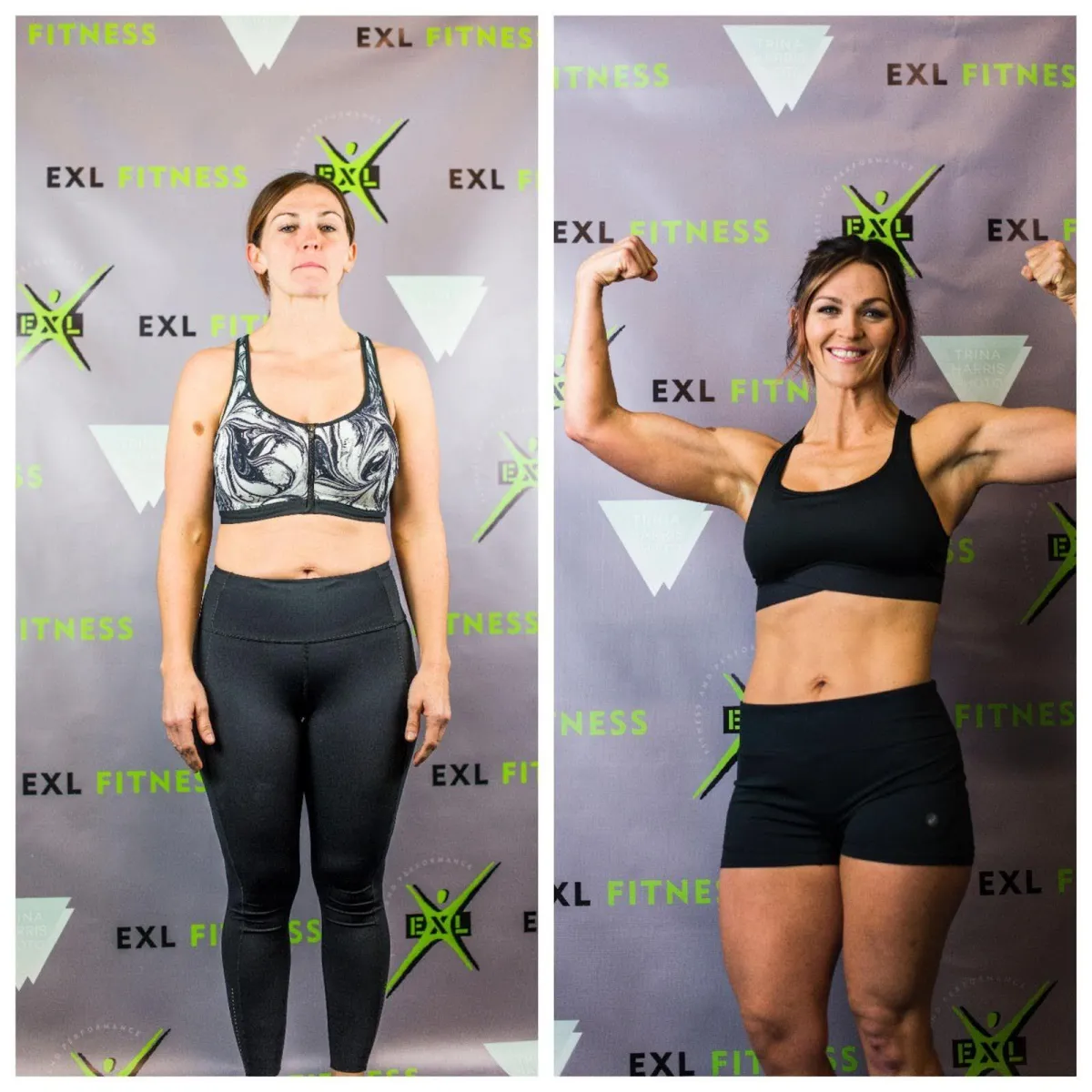
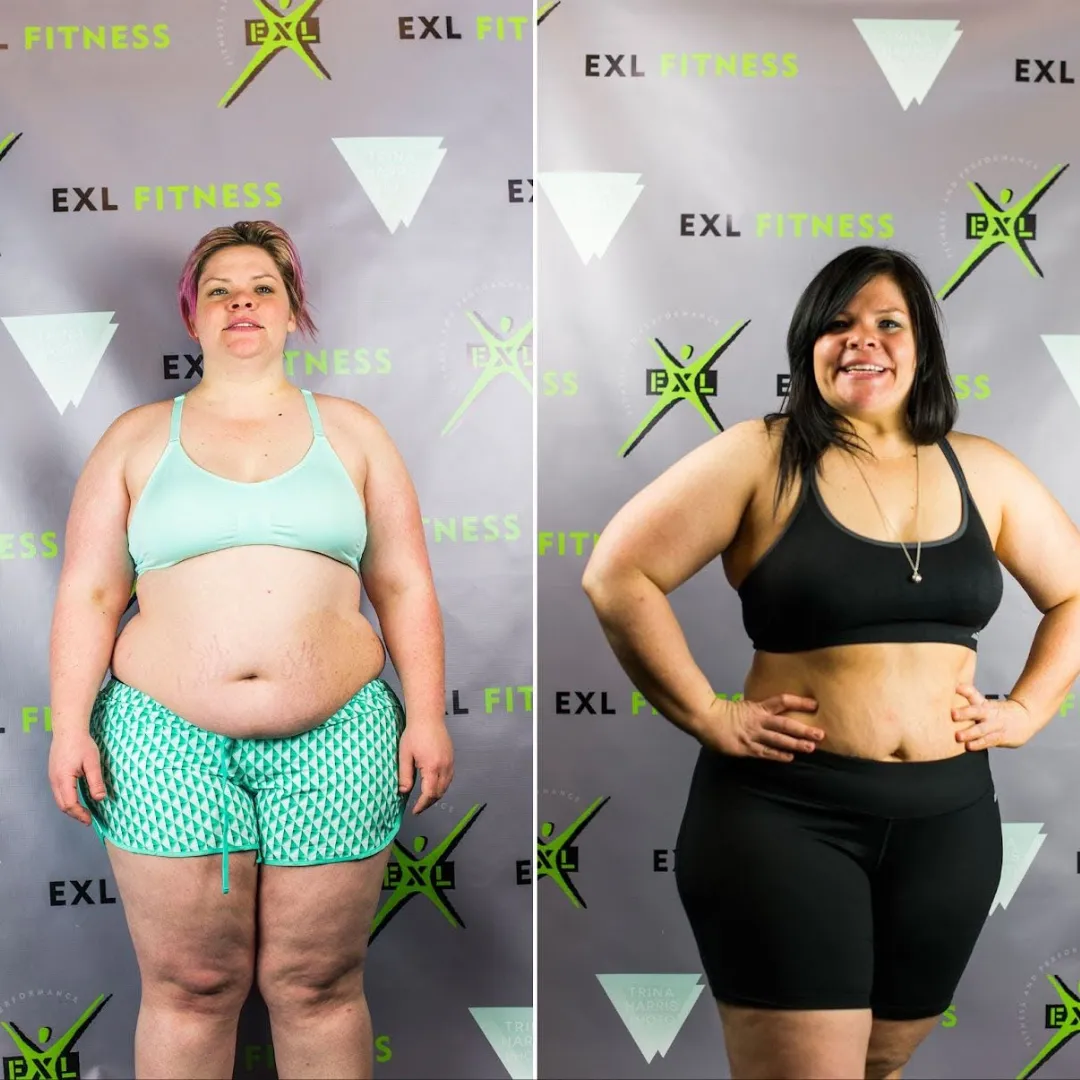
 DSC00558_1DSC_3776


My dad has been overweight for most of his life, but recently he lost over 100 lbs, but he didn’t accomplish this till he started following some professional advice and start exercising smart and eating right. 


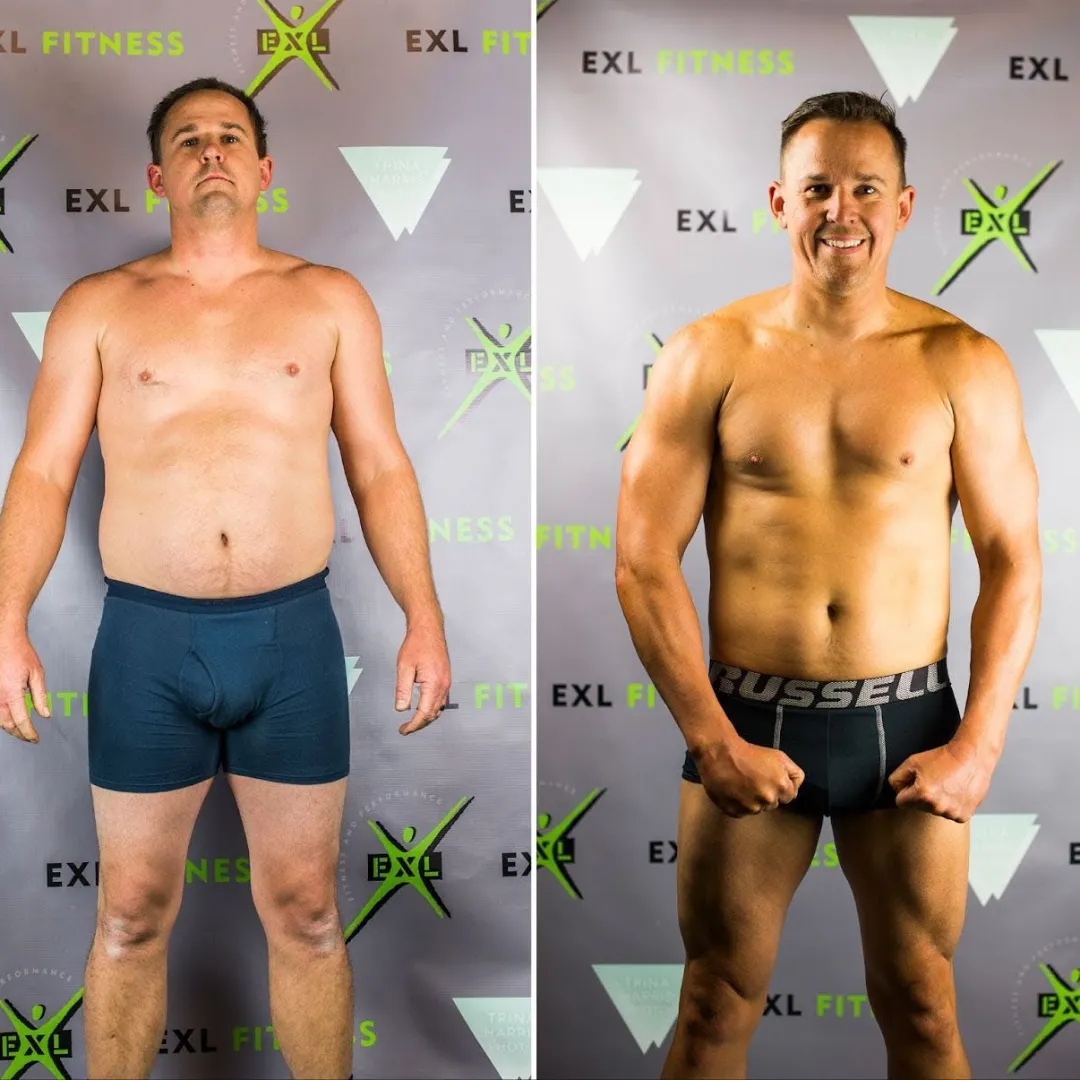
chubbyIMG_0926


Dustin Lyons, a soon to be father of 3 and business owner lost close to 40 lbs  (6% body fat) following the Precision Nutrition program and doing boot camps.  What do my dad and Dustin have in common?  They both swallowed their pride and realized that just because they are men doesn’t mean they are not endowed from on high with the knowledge of how to eat healthy and workout correctly.  I concur, it’s not cool to ask for driving directions, but it is smart to ask for nutrition and fitness advice;)


Dads- quit being so stubborn and macho. It doesn’t make you any less of a man to hire a personal trainer or join a boot camp because your wife and her lady friends do it. In reality, your wife (and women in general) are simply smarter than you because they effectively outsource their fitness needs to an expert whereby you try to re-invent the wheel on your own with little to no results.


If you want to lose your gut, follow the lead of the ladies ;)  


2.) Quite watching so many sports get up and actually play more sports


Get active.  Even if it’s just getting out and playing a round of golf, it’s more activity than you’re getting on the couch watching the Masters.  Pass on the golf cart and walk or jog in between holes.  The average golfer on a 18 hole golf course walks about 5 miles.  The University of Kalmar did a study involving 31,000 indivudual and found that both men and women between the ages of 20-40 need over 12,000 steps a day to promote weight loss.  That translates to roughly 6 miles (University of Kalmar, January 13, 2008).  So play a few rounds a week and turn some of that inactive TV time into some calorie burning time.  Heck if you’re a golf hack like me, you’ll probably be walking twice that distance;)


A few games of hoops can also help keep the metabolism ticking.  Take advantage of our great outdoors and take a hike or a bike ride.  The key here is just to get more active and replace some of your ineffective TV time.  That being said these activities should not replace your regular strength training and cardio programs, especially if fat loss is a goal.


3.) Don’t starve yourself

Cutting calories often times seems like the logical option to lose weight.  In fact, dads are bombarded everyday with TV ads promising weight loss eating the same foods they love.  Sounds good at first, but what they don’t tell you is that the serving size is so small it wouldn’t fill the stomach of a small child.  Adherence to this meal plan is challenging because of starvation, but even if dad does have the mental fortitude to control his hunger, when he goes off his diet and retunrs to a “normal” eating routine he’ll end up taking on weight like your backpack takes on gear when going on an over-nighter backpacking trip with your son’s Boy Scout Troop.

53565651_13522430cd

Dad, my pack is too heavy. Can you carry my...?


Look- if you honestly think you can keep eating the same foods that blessed you with that gut in the first place, then I’m not sure how much more I can help you.  You can lose weight eating less of the same foods, but you risk losing muscle tissue and it does nothing for your health to keep eating empty calories.  Do yourself a favor and eat 40-60 gr of protein with every meal along with 2-3 servings of vegetables and a serving of healthy fat.  And yes, there is portion control within those systems, but to me it’s a like a big terd versus a small terd… IT’S STILL A TERD!

cwln119l


4.) The “no pain-no gain” attitude will leave you a bitter, crippled, and grumpy old man


The “no pain, no gain” methodology is quite possibly the most abused practice in fitness. Pain is a good thing as long as it’s the right type of pain as outlined below:


When exercise BURNS YOUR MUSCLES that’s a good pain- this means you are pushing past your comfort zone to inspire change, working with intensity to torch calories and build muscle, and burning sugar so your body can burn fat for hours and hours after your workout.


When exercise HURTS YOUR JOINTS that’s a bad pain- it means you are quickly wearing down the structural integrity of your joints and will soon be unable to do anything without pain or stiffness. This is most often caused by a combination of using too heavy of loads, poor exercise form and technique, strength imbalances, and lack of mobility and/or flexibility- more reason to heed Tip#1 and seek professional help! 


I have worked with too many dads who have beaten their bodies down and nothing’s more depressing than a dad who can’t play with his kids or participate in recreational activities with his buddies. Do yourself and your family a favor and stop being such a meathead when it comes to exercise. Exercise doesn’t have to hurt to get results and nobody wants another grumpy AND injured old man ;)

warner-image-mptvnet-grumpy-old-men-1993


5.) Make the time for a 5-minute warm-up


You simply can’t afford NOT to warm-up. It’s like pushing the pedal to the medal in the dead of winter in your frozen car- things just don’t work right and you’re not going anywhere.

finice

A cold body, like a cold car, doesn’t run on all cylinders


It only takes about 3-5 minutes to lengthen your muscles and lubricate your joints to best prevent injury and ready your body for a more effective workout, so don’t skip the warm-up!


Below is a great 5-minute body weight warm:


Alternate between 50 s of work and 10 seconds of rest for each exercise in the following warm-up circuit:


1- Stationary Running

2- Jumping Jacks

3- Lunge, Reach and Twist (left leg)

4- Lunge, Reach and Twist (right leg)

5- Handwalks with a Push Up


6.) Stop just working the “mirror” muscles.  Hit your legs and your back


Most dads just want to do the typical meathead workout that emphasizes the upper body only. If you are going for the Johnny Bravo look where you are built up top with chicken legs for wheels, then keep doing what you’re doing.

Johnny-Bravo2


However, it is important to note that strong, muscular legs are the key to torching your gut. After all, the majority of your body’s muscle mass, and thus metabolism, is contained within your lower body. Not working your legs is like going to a gun fight without a gun, and here’s why:


a.) Training your whole body (legs included) not only helps you burn more calories each workout, it also maximally depletes your body’s glycogen stores (the sugar in your muscles) to allow for more total body fat burning


b.) The more lean muscle mass you have in your lower body the more calories your body will be burning 24-7-365 outside of your workouts


c.) Whenever you work your legs you generate the largest increases in natural anabolic hormone levels which translates into more total body muscle and less ugly, unwanted body fat


So if you want better abs, you better start using those legs! This can be easily accomplished with 3 total body workouts per week that train your upper body, lower body, and core within the same workout.


So do something besides bench presses and curls. 

42-16881508

This guy is waaay too happy and ebullient doing curls.


Look- I get why guys don’t want to train their legs. Unless you are wearing a speedo, no one is going to see them! So there is simply not as much motivation to put the time and effort into your lower body as there is for your upper body which is always on full display at the beach or poolside.


However, if you are trying to develop a really nice upper body, you need to start venturing outside the realm of bench presses and curls. Don’t forget, you do have muscles on the backside of your body too!


In fact, your lats (the wings that extend from your arm pit to the bottom of your rib cage) are the biggest muscles in your upper body and when developed they really help promote that V-shaped torso that both makes your waist look smaller and your wife happy ;)


Start doing at least the same if not more amount of pulling exercises as pushing unless you want to end up like the Hunchback of Notre Dame.


Lastly, only do isolation movements like bicep curls if you have extra time after your main workout. Compound movements like rows and pull-ups work your biceps just as hard and since they allow for the use of heavier loads, they also provide a better growth stimulus to maximize results in minimal time. 


7.) Lay off the Brewskis


It’s no wonder why our dads have more of a keg for a gut than a six-pack. See below for the best way I know of explaining how detrimental alcohol can be on your body composition:


How Alcohol Makes You Fat


-Alcohol first passes through the esophagus as it travels to your stomach.


-From there, 20% of the alcohol is absorbed immediately by your bloodstream. 


-The remaining alcohol travels to your intestines and is absorbed from there.


-The alcohol in your bloodstream then travels directly to your liver. It is here that

the body breaks the alcohol down, something that is absolutely essential since

alcohol is toxic to the body.


-Alcohol breaks down into acetate and acetaldehyde which IMMEDIATELY

signals to your body to stop burning fat. Even worse, another waste product of

alcohol, acetyl CoA, actually starts to make more body fat.


beer-belly

Yeah, thumbs up dude!


What Does this Mean?   


-Your body can only effectively process 0.5 to 1 ounce of alcohol per hour


-How much damage? A 12-ounce beer contains about 0.6 ounces of alcohol. If

you consumed 5 of these, your body would be inhibited from fat burning for up to

6 hours. This is aside from the fact that your body will actually be storing fat

during these 6 hours! The more you drink, the longer your body is inhibited from

burning fat in addition to a greater fat build up from excess acetyl CoA. As you

can see, one day of binge drinking can set you back days if not a full week when

it comes to fat loss!


-What’s the worst-case scenario? Mixing alcohol with sugary beverages

promotes even further fat gain due to the resulting insulin surge that triggers fat

storage (e.g. regular beer or cocktails mixed with regular soda and/or fruit juice)


The Bottom Line


If you want to be lean, you must minimize ALCOHOL consumption!


If you must drink:


a.) Choose wine or hard liquor and “light” beer

b.) Limit alcohol consumption to 1-2 days per week with a 1-2 drink per day max


There you have it, a few tips to help prolong the life of the big guy (dad) in our life.  Thanks, Dad for all you’ve taught me.  Love ya Pops.


Stay Fit


Mat “the trainer”


PS- Feel free to make a comment on your dad’s fitness level or how important it for dads to stay fit.


PSS- as always feel free to share this blog post with your dad anyone looking to shed some fat, get stronger and feel more energy.


PSSS- Word of the Day: ebullient; adj. overflowing with fervor, enthusiasm or excitement.


To book Mat to speak at your Utah Valley company, club, or organizations please contact him by email at matgover@mac.com or by phone at (801) 836.7185. For a free one-week trial to his Orem boot camp to experience the best personal training in Utah Valley please call Mat or drop by the gym (1623 N State St, Orem right next to Costa Vida).


References: 


Campbell and Volek, “TNT Diet: Targeted Nutrition Tactics”


University of Kalmar, January 13, 2008. For Weight Control You Will Need To Walk More Than 10,000 Steps A Day. ScienceDaily


Nutrition Tip #1, and the Famous Banana Cream Pie Oatmeal Recipe

20 06 2009

EXL_RGBOne of the most common questions I get asked is, “What do you eat, Mat?”  I get asked this as if the answer should take 1 minute to answer.  This typifies America’s attitude towards food.  My mother-in-law has a saying up in her kitchen that describes it best, “If we are what we eat then I’m either fast, cheap or easy.”  Nutrition needs to be a priority in our lives, and I’ve said this before, it can’t be an after thought.  Grabbing a bagel or yogurt on the way out the door in the morning or lunch through a fast food drive thru shows little effort to actively participate in your health and longevity, not to mention your physique.  So, what do I eat?  Without going into my 4 month course where I teach the Precision Nutrition principles, I’ll answer that question one tip and a time.  Within these tips I will also share some of my favorite recipes.  Most of these tips are written by Precision Nutrition founder, John Berardi.  And most of the recipes will be out of the Gourmet Nutrition Cookbooks.


Tip #1
Eat Pasta… Carefully
by Dr. John Berardi

As a God-fearing Italian, I have to admit that I love pasta. But, as a gut-fearing weight lifter and athlete, I definitely have to choose the lower GI, nutrient dense whole-wheat variety. During training phases that require or allow for higher carbohydrate intake (higher volume training) I’ll eat one whole-wheat pasta meal per day. During other phases (like where I’m trying to lose fat), the pasta stays on the shelf in favor of a higher lean protein, good fat, and fruit and veggie intake.

SEE ALSO:
This tip is sponsored by Precision Nutrition – my pick for the best nutrition and supplement resource currently available.  Either on your own or within one of my PN coaching group.  Precision Nutrition contains system manuals, gourmet cookbook, digital audio/video library, online membership, and more, Precision Nutrition will teach you everything you need to know to get the body you want — guaranteed.  

Order Precision Nutrition now and get $50 off!


Banana Cream Pie Oatmeal (Gourmet Nutrition vol 2)IMG_0902

1 c low-fat milk

1/4 c coconut milk

1/2 c old-fashion large flake oats

1/4 c water

1 scoop vanilla whey protein (equal to 25 g protein)

1/2 medium banana (sliced)


Over medium high heat bring the milk and coconut milk to a boil.  Add the oats.  Reduce the heat to low and simmer until the oats absorb the milk (about 7-10 minutes), stirring occasionally.  Combine water and protein powder together in a separate bowl.  Mix with fork until protein dissolves.  Pour protein mixture and banana over oatmeal and serve.  

Servings for 2 men or 4 women/children (women and children eat 1/2 the serving size as men)

This is a healthy post-workout meal.  Meaning this should be eaten within an hour or two of finishing a workout, when the body can hormonally handle the carb load.  Outside of that window, your body may store some of these calories as fat.
I’ve also substituted blueberries instead of bananas, which is yummy too.
Stay Fit, 


Mat “the trainer”


Ps- Feel free to make a comment on this nutrition tip and recipe or share some of your favorites as well 


PSS- as always feel free to share this blog post with anyone looking to shed some fat, get stronger and feel more energy.


To book Mat to speak at your Utah Valley company, club, or organizations please contact him by email at matgover@mac.com or by phone at (801) 836.7185. For a free one-week trial to his Orem boot camp to experience the best personal training in Utah Valley please call Mat or drop by the gym (1623 N State St, Orem right next to Costa Vida).


How’s Your Return On Investment For Your Workout?

17 06 2009

EXL_RGBIn a previous post (The 5th Fitness Tip) I discussed nutrient timing, and more specifically the workout/recovery shake. A workout/recovery shake assists in maintaining adequate blood sugar to ensure high intensity workouts and also assists in getting a jumpstart on recovery to aid in muscle maintenance/gain and energy recovery for your next workout.

During this time of economic distress the acronym ROI (return on investment) gets thrown around like the Sports Illustrated Swimsuit Edition gets thrown around in a high school boys locker room. Whether we are talking about our wallets or our health we all want a high ROI. If you are investing valuable time every week to exercise and not giving your body the correct building blocks to repair and build muscle than you’re getting a very small ROI.

images

Some guys idea of workout recovery

Even you ladies out there need proper exercise nutrition. Let me ease your concerns. Drinking a workout/recovery shake will NOT cause you to feel gravid or swell up like my 19 month old grandson’s diaper after a long night . You may have plenty of hormones but you lack the key hormone to get any significant amount of muscle gain…testosterone.

photo

Them some saggy drawers.

Studies show that we should consume somewhere between 0.36-0.54 grams per pound body weight (I know, I know I’m mixing up my measuring systems… metric and standard. For you Canucks that’s 0.8-1.2 grams per kilogram body weight or you anti-metric, true-blue Americans 0.012-.019 ounces per pound body weight. We all need to convert to the metric system to make things simpler) (van Loon et al 2000a). As far as protein goes we need 0.09-0.18 grams per pound body weight (0.2-0.4 grams/kg body weight or 0.007-0.014 oz/lb)(van Loon et al 2000b, Roy et al 1998). Because of the improved essential amino acid content the higher protein amount may be better.

To put this into perspective:

135 lb Women                  180 lb Man
Carbs            49-73 grams                    65-97 grams
Protein         12-24 grams                    16-32 grams
Calories         244-388                             324-516

If your goal is to gain muscle opt for the higher end range for both carbs and proteins, for fat loss choose the lower carb range.

First of all, a workout/recovery shake is an exception to the “Healthy 10” nutrition rules. It does not contain fruit, vegetables, fiber or fat (no bananas, strawberries, nuts, flax, peanut butter, coconut milk, coconut, vegetables). It consists of fast digesting protein (whey protein isolate or whey protein hydrolosate not regular whey protein powder) and a fast digesting carbohydrate (dextrose, maltodextrin, waxy maize). I also like to throw in 1 tsp (5gr) of glutamine to help neutralize the acidic load of the protein powder as well as to minimize muscle catabolism (breakdown).

Study after study purports the benefits of a workout/recovery shake. In fact, many leading sports nutritionists claim that your workout is for not unless you ingest a workout/recovery shake.

If your strength-training workout is first thing in the morning then start consuming the workout shake before your workout and sip it throughout the workout. Depending on how intense the workout is or how your body is responding in your routine body composition analyses you may need another shake after your workout, especially if muscle gain is your goal. Of all times of the day this is the most crucial. I’ve heard every excuse. “Mat, I’m not hungry in the morning.” “Mat, I don’t have time to make a shake.”

Are you for real? Would you drive to the gym on an empty tank of gas? No way, you may not have time to fill your tank, but you would at least drop by the gas station and put $5-10 bucks of gas in your tank. Take 5 minutes to make a shake or make it the night before and keep it in the fridge and then train yourself to drink it in the morning. You will notice a difference in your workouts and in how you feel afterwards as well. Heck, you’ll even notice your desire to roll your butt outta bed to do intervals the next morning improve.

128815612787906152

I'm sure he's doing intervals in his sleep.

If your workout is at any other time in the day, make sure to maintain your usual eating routine, ensuring to eat within 2 hours before your workout. Then begin sipping your workout/recovery shake half way through your workout and finish it within 45 minutes after your workout. Studies show that our “window of opportunity” is within 1 hour of our workout, any longer and the benefits decrease with each hour (Tipton et al 2001, Levenhagen et al 2001). Resume your usual healthy nutrition plan 1-2 hours after your workout/recovery shake.

Remember a workout/recovery shake is utilized with strength training workouts as well as cardio bouts or sport activities that last 60 minutes or longer. I promise when you beginning investing in a workout/recovery shake your time in the gym will be better invested as well.

Prograde Workout is an excellent workout/recovery shake

Prograde Workout is an excellent workout/recovery shake

There are two brands of pre-made workout/recovery shakes I recommend Prograde Workout and Biotest Surge.  If you do prefer to buy all the ingredients and make your own shake here is the general recipe.

General Workout/recovery Shake Recipe

Start with a 2:1 carb:protein ratio. This means twice as many calories/grams of carbs as protein. Depending on your results, with body composition analyses and your performance in workouts, you can adjust the amount of carbs.  This works well form most men.  Bigger guys (over 220 lbs) should double this recipe.  Most women should half the recipe.

1 scoop whey protein isolate or hydrolosate (20-25 grams of protein)
1/6 (2 tbsp + 2 tsp) cup dextrose
1/4 cup maltodextrin
1 tsp glutamine

1 scoop whey protein isolate or hydrolosate (20-25 grams)
1/3-1/2 cup waxy maize
1 tsp glutamine

Here are some links to purchase ingredients:

Iso Sensation Whey Protein Isolate (use 3/4 scoop)
Pro Lab Isolate
Isopure Zero Carb (1 scoop or 1/2 of the suggested serving and it already has about 5gr of glutamine so no need to add any more)
Now Whey Protein Isolate (1 scoop or 1/2 suggested serving)

All Max Nutrition Waxy Maize (use 1 1/2 scoops, some studies suggest waxy maize being a superior carb source to dextrose/maltodextrin)

GL3 L-Glutamine
Glutamine Fuel Powder
Scifit Glutamine Powder

Dextrose and maltodextrin can be purchased at a health food store (if you are in Utah Valley Good Earth 500 S State St in Orem carries both)

Just to manage expectations, do not expect this shake to taste like your regular fruit and protein smoothie. You’re drinking it for performance purposes. To help with this,
feel free to add different flavorings to add some excitement to your workout shake. Mint extract with chocolate is awesome, same with orange extract and vanilla. Banana extract tastes good with both chocolate and vanilla. Bon apetito!

Stay Fit,

Mat “the trainer”

To book Mat to speak at your Utah Valley company, club, or organizations please contact him by email at matgover@mac.com or by phone at (801) 836.7185. For a free one-week trial to his Orem boot camp to experience the best personal training in Utah Valley please call Mat or drop by the gym (1623 N State St, Orem right next to Costa Vida).

Ps- Feel free to make a comment on the difference a workout shake makes on the quality of your workouts and your recovery.

PSS- as always feel free to share this blog post with anyone looking to shed some fat, get stronger and feel more energy.

PSS- Word of the Day: gravid (GRAV-id) adj. being with child; heavy with young or eggs; pregnant.

References

Roy et al. (1998). Influence of differing macronutrient intakes on muscle glycogen resynthesis after resistance exercise. JAP. 84(3): 890-896.

Van Loon et al. (2000a). Maximizing postexercise muscle glycogen synthesis: carbohydrate supplementation and the application of amino acid or protein hydrolysate mixtures. Am J Clin Nutrition. 72(1): 106-111.
Van Loon et al. (2000b). Ingestion of protein hydrolysate and amino acid-carbohydrate mixtures increases postexercise plasma insulin responses in men. J Nutr. 130(10): 2508-2513.

Levenhagen et al. (2001). Postexercise nutrient intake timing in humans is critical to recovery of leg glucose and protein homeostasis. Am.J.Physiol Endocrinol.Metab. 280(6): E982-993.


If You Want to Race Fast…Train Fast

8 06 2009

EXL_RGBThe Problem with Traditional Cardio Training and the Modern-day Solution for Endurance Athletes

 
We live in a fairly active society. At any given time you can drive down the street and see someone running, biking or walking. More and more people are competing in triathlons and 1/2 marathons. In fact, many of the more popular races (St George Marathon, Moab 1/2 Marathon, Jordanelle Tri) reach their maximum entry levels months before the gun goes off. What is it about steady-state cardio that we like? Is it the endorphin rush or “runner’s high” that keeps us coming back for more? Maybe it’s the sense of accomplishment felt when completing something both physically and mentally challenging. For some they register for a race in hopes it will motivate them to train. Most of you know that I am not a fan of steady-state cardio for fat loss. Research has found that interval training is 9 times more effective at burning body fat than steady state cardio. But, we still do it. Why? For a lot of us it is a guilty little pleasure…an escape. This last weekend I mountain biked the Three Forks trail to the hot pots up Diamond Fork Canyon. It was not a textbook form of intervals to maximize my fat metabolism, but I didn’t care. The canyon in the morning light was breathtaking and oneiric, the naturally warm water from the hot springs felt amazing at the end of the ride. Not to mention riding with old friends and the adrenaline of bombing the downhill. If you are a cardio junkie you know what I’m talking about. It’s the experience. So, can you have the ”experience” and still have the fat loss results? Yes, but you marathoners and Olympics distance triathletes may have to change the way you look at traditional endurance training.

2875441679_a546218f73_b

First let me rant about the downfalls with “traditional” endurance training.
1. Lots of slow miles: While I was training for my first Olympic distance triathlon I was told I needed to build my “aerobic base”. This meant logging in enough miles to circumnavigate the globe at a 60% intensity level before I was allowed to open up the throttle and actually run or bike at a challenging pace. In fact, the common suggestion was 75% of my total training time was supposed to be devoted to 60% effort activity (which is painfully slow, whether you’re running or biking). I followed that advice and I must say I did become more efficient; I was able to survive my first few triathlon seasons. But I wasn’t killing it. My times remained about the same, but I wasn’t getting any faster.
2. Overuse injuries: Doing long workouts I started getting some typical “-itises”. You know plantar fasciatis, tendonitis, bursitis (including IT band syndrome). Most cardio junkies accept these as part of the game, they blame it on poor footwear or running surface and continue on with their training program taking some vitamin I (ibuprofen) and grinding through it. The highly repetitive nature of endurance activities breeds over-use injuries like the media breeds hysteria over the swine flu.
3. Big time commitment: You noticed I only mentioned that I did a few seasons of triathlons. That’s because it consumed my life. The time commitment to swim/bike/run was pushing 15 hours/week. I remember the end of my last season looking back at my previous year and I realized that I could count the times I went rock climbing on 1 hand!! I had sacrificed one my biggest passions for triathlons.
4. Endurance athletes don’t need strength training: This old school philosophy is dying down, but it keeps coming back like the lyrics to the freecreditreport.com jingle. Within the last year a high school cross country athlete told me her coach didn’t want her doing any strength training because it would make her gain weight and become slow. I told her that her coach’s advice was like the Sony Walkman he still listens to while he runs…outdated. Stronger legs equals faster runner.
5. Not enough soft tissue work: Every athlete needs more soft tissue/ body-work (massage), especially endurance athletes. Even if you can’t afford a professional get a foam roller and work those overused muscles out yourself to stay ahead of those pesky “itises”. Once you get on a routine with your roller, you’ll wonder how you ran or biked before without it.

Modern Day Solution

There are 2 ways to build endurance, add more distance or build more power. To put it in perspective let’s define an endurance athlete. Most people erroneously think that the best endurance athlete is the athlete who can go the longest in a given activity. Sorry, all endurance events have a finish line. Lance Armstrong did not win the Tour de France because he could go the longest. He was the FASTEST cyclist, not the cyclist who could cross the finish line and keep going. He was the person who could maintain the fastest sub-maximal effort. So, an endurance activity requires a constant, sub-maximal effort for an extended period of time.

images-4

In my triathlon example above I tried building my aerobic base by running and biking long distances somewhere between 50-70% of my maximum effort and hoping come race day to compete at 75%. At what intensity do you think I competed? You’re right about 70%. I had practiced that intensity for months. When I tried to go harder I couldn’t maintain the bump up in intensity. I trained slow, therefore, I raced slow. But, what if I had increased my power output? In other words, let’s give my max effort a point rating of 100. I competed at 70% so that would be 70 points. What if I improve my max effort to 130 points? Seventy percent of 130 is 91 which is far better than even 80% of 100. Get it? The bigger the motor the easier sub-maximal effort becomes. To put it in terms of weight training, if I have a guy that can 1 repetition max squat 300lbs and another that can 1 repetition max squat 250lbs who will be able to squat 225lbs twenty times the fastest? Barring some technique flaw or freak injury, the stronger athlete will tire more slowly. You don’t become a stronger runner or biker training slow. Solution? You guessed it intervals.

Here are some sample programs:

Minimizing Rest Interval at Race Pace
Let’s say you can run a 10K at a 7-minute mile pace. You would finish the race in a little less than 44 minutes. If you want to shave 5 minutes off your time you would need to maintain a 6-minute mile pace. After a proper warm-up, run at a 6 minute mile pace for as long as you can (this is best performed on a treadmill where you can set your pace). If that were 2 miles, it would take you 12 minutes. At that point jog or walk for 6 minutes (half the time it took you to run the 2 miles) then resume your race pace for as long as you can again followed by your recovery pace for half as long as you were able to maintain your race pace. Continue with race the pace/recovery pace circuit till you have completed 10K (6.3 miles) then cool down. Perform this workout 1 or 2 times a week for 2 weeks then reduce your recovery by 1 minute. So if after 2 weeks you were able to maintain your race pace for 2.5 miles or 15 minutes (at a 6 minute/mile pace) then take half that time minus 1 minute so you would perform your recovery pace for 6.5 minutes. After 2 weeks with that equation start taking 2 minutes off your recovery time. Keep taking another minute off each 2 weeks till you can run the entire 10K without rest.

This can work with longer endurance activities as well. But limit your interval training to 10-12 miles. As with any exercise if the activity is 60 minutes or longer utilize proper nutrition to maintain performance and reduce recovery time.

Minimizing Rest Interval at Max Output
Divide your scheduled distance into 3 or 4 segments. If you’re training for a 5k (3.2 miles) break it into three 1-mile segments. After a proper warm up, run 1 mile as fast as you can. Rest for half as long as it took you to run the first mile. Then run the next mile again as fast as you can, rest and repeat. Every week reduce your rest time by 30 seconds. So after 2 weeks your rest phase will be 50% of your mile time minus 1 minute. Feel free to walk around and stretch during this rest phase to help assist in recovery.

Sprint Sets
Choose a course that is 40-60 yards. After a proper warm up sprint maximally for the entire distance, should take 5-10 seconds depending on the distance. Turn around and jog back. It should take you 3 times as long to get back. So if on a 40m sprint it takes you 5 seconds to complete jog back to the starting line in 15 seconds and repeat 6 times. This should take about 2 minutes to complete, and then take a minute to rest and stretch. Repeat another 6 reps and then take a 2-minute rest. Repeat this 7-minute circuit 3 times for a killer 20-minute workout. This is not for the mentally weak. You can use this system for just about any training distance just maintain the same work/rest ratio. This workout is no joke so be prepared.

These workouts apply to biking as well, and can work with swimming if your technique is solid. Swimming is so technique dependent that it pays for a beginning swimmer to become more efficient with their stroke first. It makes no sense to add endurance or power to poor technique.

sizecycle

Due to the intensity required for these workouts, recovery is paramount. I would recommend performing 3 workouts a week with a days rest in between. Realize the recovery from the workout is more important than the workout itself. You must allow your body and psyche to recover to ensure the same intensity in your next workout. This is a hard concept for most cardio junkies to accept. You do not need to train everyday. Remember we are working on developing a bigger engine by performing shorter, higher intensity workouts. On the off days perform mobility work, soft tissue work (foam roller) and strength training. Your training will involve fewer repetitions so fewer overuse injuries and less time required for training. One of the most important components to endurance training is efficiency. Less time training and better results…now that’s efficient.

Unless you’ve been hiding under a rock you know that strength training is good for everybody. But somehow true cardio diehards seam to think they fall into the “super-human” category and don’t need strength training. Let’s review some of the benefits of strength training (these are just a few of many).
1. Helps maintain lean muscle tissue (which is negatively affected by endurance training)
2. Enhances endocrine and immune function (also compromised by endurance training)
3. Improves functional capacity despite aging by maintaining maximal strength and power.
4. Improves bone density (something most endurance athletes suffer from due to poor dietary practices, in spite of being at a high risk to stress fractures.)
5. Allows us to improve muscle imbalances, which is evident from the fact that good physical therapists use strength training to correct these imbalances. (most endurance athletes have some sort of muscle imbalance and arguable mental as well).

So to find out whether you truly are a super-human cardio junkie and don’t need strength training reread the 5 points above and ask yourself 1. Do I have muscles and do things that require strength and power? 2. Do I have an immune system? 3. Will I get old? 4. Do I have bones? 5. Do I have muscle imbalances? If you answered “no” to any of these question grab your cape and trusty sidekick because you truly are super-human and should be off fighting crime and saving the world.

IMGP1332

At one time I thought I was a super hero...LOL


In case you’re still not convinced check out these studies

-A University of Alabama meta-analysis of the endurance training scientific literature revealed that 10 weeks of resistance training in trained distance runners improves running economy by 8-10% (1). For the mathematicians in the crowd, that’s about 20-24 minutes off a four-hour marathon – and likely more if you’re just a recreational endurance athlete.

-French researchers found that the addition of two weight-training sessions per week for 14 weeks markedly increased maximal strength and running economy while maintaining peak power in triathletes. Meanwhile, the control group – which only did endurance training – gained no maximal strength or running economy, and their peak power actually decreased (without a strength training program your performance can actually get worse). And, interestingly, the combined endurance with resistance training group saw greater increases in VO2max over the course of the intervention (2).

-Scientists at the Research Institute for Olympic Sports at the University of Jyvaskyla in Finland found that replacing 1/3 of regular endurance training volume with explosive resistance training (BTW, Pilates and yoga do not constitute “explosive” strength training) for nine weeks improved 5km times, running economy, VO2max, maximal 20m speed, and performance on a 5-jump test. With the exception of VO2max, none of these measures improved in the control group that solely performed endurance training (3). How do you think they felt knowing that a third of their entire training volume was largely unnecessary, and would have been better spent on other initiatives?

-University of Illinois researchers found that addition of three resistance training sessions for ten weeks improved short-term endurance performance by 11% and 13% during cycling and running, respectively. Additionally, the researchers noted that “long-term cycling to exhaustion at 80% VO2max increased from 71 to 85 min after the addition of strength training” that’s over a 15% increase in the cyclists’ ability to maintain high intensity exertion. (4)

The take home message here is that everyone including endurance athletes should strength train. And everyone should be performing interval training especially if you’re interested in fat loss and faster performance times. You really can have the “experience” and the results.

1. Jung AP. The impact of resistance training on distance running performance. Sports Med. 2003;33(7):539-52.
2. Millet, GP, Jaouen, B, Borrani, F, Candau, R. Effects of concurrent endurance and strength training on running economy and .VO(2) kinetics. Med Sci Sports Exerc. 2002 Aug;34(8):1351-9.
3. Paavolainen, L, Hakkinen, K, Hamalainen, I, Nummela, A, Ruski, H. Explosive-strength training improves 5-km running time by improving running economy and muscle power. J Appl Physiol. 1999 May;86(5):1527-33.
4. Hickson, R. C., B. A. Dvorak, E. M. Gorostiaga, T. T. Kurowski, and C. Foster. Potential for strength and endurance training to amplify endurance performance. J. Appl. Physiol. 65: 2285-2290, 1988.


Follow

Get every new post delivered to your Inbox.