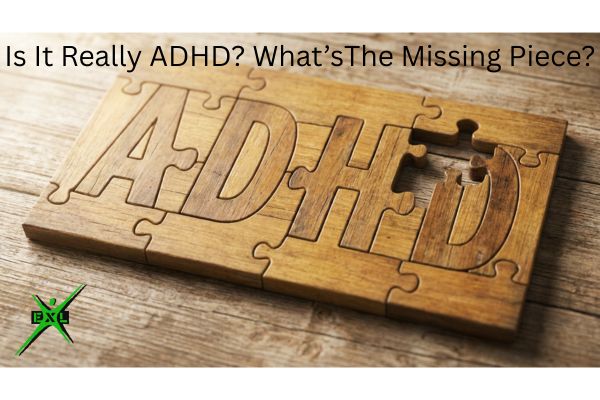
Is It Really ADHD? What Our LÉVO Workshop Taught Me About the Missing Pieces
Before you chase a diagnosis or a prescription, make sure sleep, food, and movement aren't already answering the question.
I've had more client conversations about focus, forgetfulness, and "brain fog" in the last year than I have in the last decade combined. So when LÉVO brought in a specialist to run a workshop on ADHD for us, I paid close attention — not because I diagnose anything (I don't, and I never will), but because what I heard reframed how I think about a problem I see in my studio almost every week.
Here's the short version: a lot of what gets called "ADHD" in adults over 40 is real and deserves real treatment. But some of it is something else entirely — a missing piece in sleep, diet, or movement that's producing ADHD-like symptoms without being ADHD at all. Mixing those two things up means some people get medicated for a problem diet, or sleep could have solved, and others get told to "just sleep more" when they need actual clinical treatment. Let's get into it.
What Adult ADHD Actually Is — and Isn't
ADHD is a neurodevelopmental condition, meaning it's present from childhood — even when it isn't recognized and diagnosed until decades later. Clinicians generally don't see it show up brand new in a 45-year-old with no history of attention problems as a kid1. That distinction matters because a sudden change in focus, memory, or follow-through in adulthood is more likely to have a different explanation: stress, sleep, hormones, medication side effects, or — particularly in the 50-plus crowd I train — early cognitive changes worth mentioning to a doctor2.
This is exactly the kind of nuance LÉVO's approach is built around: don't reach for a label until you've ruled out what else could be driving the symptoms.
ADHD and Autism: Where the Lines Blur
One thing from the workshop that surprised me: ADHD and autism overlap far more than most people assume, and untangling the two is genuinely hard even for professionals. Recent research estimates that roughly 45% of adults with ADHD show meaningful autistic traits, and depending on how a study measures it, anywhere from 20% to 50% of people land on both3. Researchers now use the informal term "AuDHD" for this overlap, and it wasn't even possible to receive both diagnoses at once until a 2013 update to psychiatric diagnostic criteria3.
The reason this matters for a diagnosis conversation: the two conditions can mask each other. Attention difficulties, restlessness, and trouble with transitions show up in both, and clinicians describe a pattern called "diagnostic overshadowing," where one condition's traits get attributed entirely to the other — sometimes delaying an accurate diagnosis of either into adulthood4. None of this is something you or I should try to sort out ourselves. It's exactly the kind of nuance that makes a thorough, whole-picture assessment — the LÉVO approach — worth more than a quick symptom checklist.
The Impostors: What Gets Mistaken for ADHD
Beyond autism, three other things walk into my studio wearing ADHD's clothes almost every week: poor sleep, blood sugar swings, and a body that isn't moving enough. Up to 80% of adults with diagnosed ADHD also have significant sleep problems5, and the reverse is just as important — plain sleep deprivation produces inattention, impulsivity, irritability, and poor working memory that can look identical to ADHD on a symptom checklist6. Many adults with ADHD also run on a delayed circadian rhythm, meaning their body doesn't feel sleepy until well past midnight; force that person into a 6 a.m. wake-up, and you'll see attention problems whether ADHD is in the picture or not7.
Sleep: Fix This Before You Assume Anything Else
If you take one thing from this post, make it this: before you or your doctor start asking whether it's ADHD, get a real look at your sleep. Are you actually getting 7 to 9 hours? Do you snore, wake gasping, or feel exhausted no matter how long you slept? Sleep apnea in particular is common, underdiagnosed in adults over 40, and produces the exact same fog, forgetfulness, and short fuse that gets mistaken for attention disorders. A sleep study is a cheap, non-invasive way to rule out a huge chunk of what might be going on before anyone talks about medication.
Diet's Role: Blood Sugar, Omega-3s, and the Nutrients Most Adults Are Low On
Diet doesn't cause ADHD, but it absolutely modulates how symptoms show up — in people who have it and people who don't8. A few patterns worth knowing: omega-3 fatty acid status is consistently linked to attention and impulse control, with several studies showing measurable improvement in focus-related symptoms with adequate intake89. Iron, zinc, and magnesium deficiencies are also disproportionately common in people with attention difficulties, and correcting a real deficiency — confirmed by bloodwork, not guesswork — has been shown to meaningfully improve symptoms8. And the everyday offender: a high-sugar, low-protein diet creates blood sugar spikes and crashes that produce irritability, jitteriness, and an inability to concentrate that has nothing to do with your brain's wiring and everything to do with what you had for breakfast.
A personal note: this is a big part of why I take a high dose of fish oil daily and pay attention to magnesium and vitamin D — not because I have ADHD, but because these are exactly the nutrients most adults my age are quietly running low on, whether or not focus is the symptom that shows up.
Exercise: The Tool Sitting in Plain Sight
This is the part of the workshop that hit closest to home. A recent meta-analysis of adults with ADHD found that a single bout of cardio exercise produced a small but real reduction in core ADHD symptoms, along with a moderate improvement in inhibitory control — the ability to stop yourself before you act or interrupt1011. The effect from one workout is modest, but it's immediate, it's free, and it stacks: longer-term physical activity programs show promise too, even if the research there is still catching up10. None of this replaces medication when medication is genuinely needed. But if you're not moving your body most days, you're leaving a real, evidence-backed lever untouched.
LÉVO's Approach: Find the Missing Piece Before You Treat the Symptom
What I appreciated most about the workshop was the order of operations. Instead of starting with a checklist and a prescription pad, LÉVO's model starts with a thorough assessment — sleep, diet, activity, stress, medical history, and yes, screening for autism as well as ADHD — to figure out which piece of the puzzle is actually driving someone's symptoms. Sometimes that piece turns out to be genuine ADHD, and medication is exactly the right tool. That doesn't automatically mean a stimulant like Ritalin or Adderall — non-stimulant options such as atomoxetine (Strattera), viloxazine (Qelbree), or guanfacine (Intuniv) are FDA-approved alternatives for adults who don't tolerate stimulants well, have a history of substance use, or simply prefer to avoid a controlled substance12. Sometimes the missing piece is a sleep disorder nobody had screened for, or traits that point more toward autism than ADHD. Sometimes it's a nutrient deficiency, or a training-and-recovery gap I can actually help with in my studio. The point isn't "never medicate" — it's "know what you're treating, and what tool actually fits, before you treat it."
A Pattern I See Often
I'm not naming names here, but the pattern below shows up constantly in my studio: a client in their 50s comes in exhausted, scattered, and convinced something is "wrong with their brain." We look at their week and find they're sleeping five broken hours a night, skipping breakfast, running on coffee and simple carbs, and haven't done real physical activity in months. We may give them guidance on their sleep routine, or suggest they see their doc to get their hormones analyzed, but we will for sure rebuild consistent training and help them think differently about their first meal. More often than not, the fog lifts before anyone ever has an ADHD conversation. That's not proof it was never ADHD — it's proof the missing piece is worth checking first.
What To Actually Do
If focus, memory, or follow-through has genuinely changed for you as an adult, start with your doctor — and ask specifically about a sleep evaluation before anything else.
Track your actual sleep for two weeks: hours, wake-ups, snoring, and how you feel in the morning. Bring that log to your appointment.
Get bloodwork for iron, zinc, magnesium, and vitamin D if you haven't in the last year or two — don't supplement blind.
Build a protein-forward breakfast instead of starting the day on sugar or caffeine alone; watch what a stable-blood-sugar morning does to your focus.
Add 3–4 days a week of real physical activity — walking, lifting, cycling, whatever you'll actually do — and notice the effect on your head, not just your body.
If you or your doctor still land on ADHD after ruling out the above, treat it as the real, legitimate condition it is — and know that stimulants aren't the only option; ask about non-stimulant medications if a stimulant isn't a good fit for you. This isn't an argument against treatment — it's an argument for getting the diagnosis right first.
Bottom Line
Adult ADHD is real, and for the people who have it, proper treatment changes lives. But not every foggy, scattered, can't-focus adult has ADHD — some of them have a sleep debt, a nutrient gap, or a body that's stopped moving. LÉVO's holistic, assessment-first approach gets that order right, and it's exactly the lens I'd want anyone in my studio using before they accept a label or a prescription.
If you want help with the piece I can actually influence — your training and your daily habits — that's exactly what we start with in a free intro session. Book yours here.
Next week, we're back in more familiar territory — stay tuned for what's coming in the blog calendar.
Tags: ADHD, Mental Health, Sleep, Nutrition, Exercise Science, Healthy Aging, Utah Valley Fitness
References
1. Does Your Child Have ADHD, or Sleep Deprivation? WWMG Blog.
2. Adult ADHD: Risk Factor for Dementia or Phenotypic Mimic? PMC, National Institutes of Health.
3. Scientists are starting to understand how autism and ADHD can overlap. National Geographic.
4. Screening for Attention Deficit Hyperactivity Disorder in Young Autistic Adults: The Diagnostic Accuracy of Three Commonly Used Questionnaires. PMC, National Institutes of Health.
5. The Intertwined Relationship: Sleep Disorders and ADHD. California Sleep Society.
6. Symptoms of Insomnia vs. ADHD: What a Sleep Deficit Looks Like. ADDitude Magazine.
7. 10 Weird Signs You're Sleep-Deprived. TIME.
8. Foods that feed your ADHD mind. UCLA Health.
9. A closer look at the role of nutrition in children and adults with ADHD and neurodivergence. Frontiers in Nutrition.
10. The effects of physical activity interventions on the core symptoms of ADHD in adults: A systematic review and meta-analysis. ScienceDirect.
11. The effects of acute and chronic exercise on executive functions and core symptoms in adults with ADHD: A systematic review and meta-analysis. ScienceDirect.
12. Non-Stimulant ADHD Medications and How They Work. GoodRx Health.
Author: Mat Gover, BS, CSCS — owner and head coach of EXL Fitness & Performance, a personal training studio in Orem, Utah. Nearly 30 years in the fitness industry, specializing in coaching adults over 40 toward strength, mobility, and independence.


